

Seeds of Hope in Bloom: Mamawe Ota Askihk
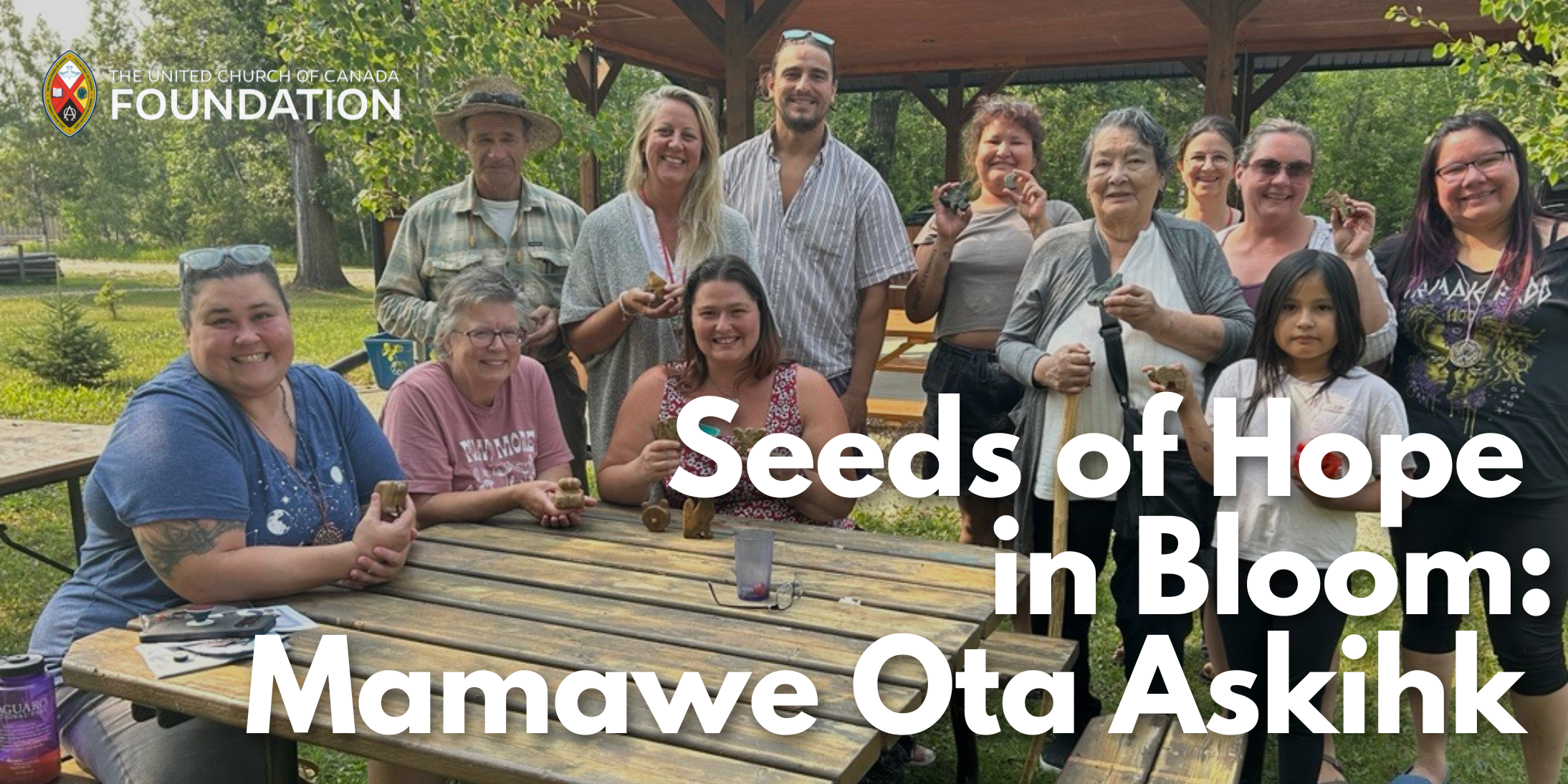
The plan was to gather ministry students and community at Sandy-Saulteaux Spiritual Centre for a week of learning, leadership, and life on the land. Supported by a $5,000 Seeds of Hope grant from the C. Jean Moore Endowment Fund, Mamawe Ota Askihk was meant to be a space where leadership could be shared, relationships deepened, and cultural teachings carried forward together.
But as the summer of 2025 unfolded, so did a different set of realities.
Wildfires across Manitoba displaced entire communities, with some families forced to evacuate more than once. Ministry students who had hoped to attend Mamawe Ota Askihk were living these realities firsthand, supporting loved ones, responding to urgent needs, and caring for their communities in the midst of uncertainty and disruption. Their absence was felt, but it was also understood as a reflection of where they were most needed.
At the Centre, the circle still held.
With little notice, Rev. Connie Budd, a graduate of Sandy-Saulteaux Spiritual Centre, stepped in to offer leadership and support.
“It was wonderful to have her join us on such short notice. She brought so much wisdom, peace, and leadership to the week.”
She opened each morning with prayer and moved easily between roles – guiding sharing circles, supporting workshops, and walking alongside participants with a steady presence. Her leadership helped create continuity and connection, even as the week unfolded differently than expected.
Participants arrived carrying a wide range of experiences and needs.
One family came in the midst of a difficult season and found it hard to engage at first. The team responded by meeting them where they were, checking in and offering gentle invitations to participate. By the end of the week, the mother and grandmother shared that they had experienced a kind of rest and peace they hadn’t felt in a long time. Their cabin became a place to slow down and begin to heal together.
Another family connected to the week in a different way, participating with full energy in daily activities and contributing wherever they could. Their presence reflected the many ways people show up in community, and by the end of the week, they described the Centre as feeling like a second home.
In between these experiences, relationships began to take root. Two participants connected through their sobriety journeys – one 15 years in, the other just one month – offering each other understanding and encouragement. A returning participant stepped into a new role, sharing traditional drum songs alongside her children and embodying the growth and leadership the program hopes to nurture over time.
For many, it was their first experience in a sweat lodge. Participants spoke of moments that were powerful, emotional, and deeply healing.
Not everything unfolded as planned. Ministry students were unable to attend, and some activities, like meat smoking, could not take place. Attendance was lower than anticipated, yet what became clear over the course of the week was that the strength of Mamawe Ota Askihk does not depend on a perfect plan. It depends on presence, flexibility, and care.
Participants were invited into leadership by helping with meals and supporting activities. Space was also made for rest and unstructured time, recognizing that healing and growth do not follow a strict schedule.
“We can’t say we restore identity and cultural knowledge in a single week,” the team reflected. “What we can do is plant the seed.”
And the seeds are already beginning to grow.
Participants are returning for ceremonies, teachings, and gatherings. Youth are becoming more involved in community life, building relationships and exploring what leadership might look like in the years ahead. Some are beginning to imagine forming drum groups and sharing traditional songs not only at the Centre, but in their wider communities.
A Seeds of Hope grant made it possible to hold this space – one that could adapt to changing circumstances while remaining grounded in its purpose. Even though only a portion of the funding was used, it ensured the program could respond with intention and care when it mattered most.
Sometimes the most meaningful outcomes aren’t the ones you plan. They’re the ones that grow quietly over time, when people are given space to rest, reconnect, and belong.
Support initiatives like this!
When you give, you help create spaces like Mamawe Ota Askihk, where culture is shared, relationships are strengthened, and healing progresses in its own time. Your support helps communities gather, adapt, and grow, even in the face of unexpected challenges.
Make a gift today to support programs that strengthen people and communities.